Wake up your quiet listings: let pricing find the buyers — and prove it paid off
Every Etsy listing keeps charging you a renewal fee, sold or not. Dynamic pricing nudges your stalled listings down until buyers return — never below a floor you set — then shows you exactly how much extra
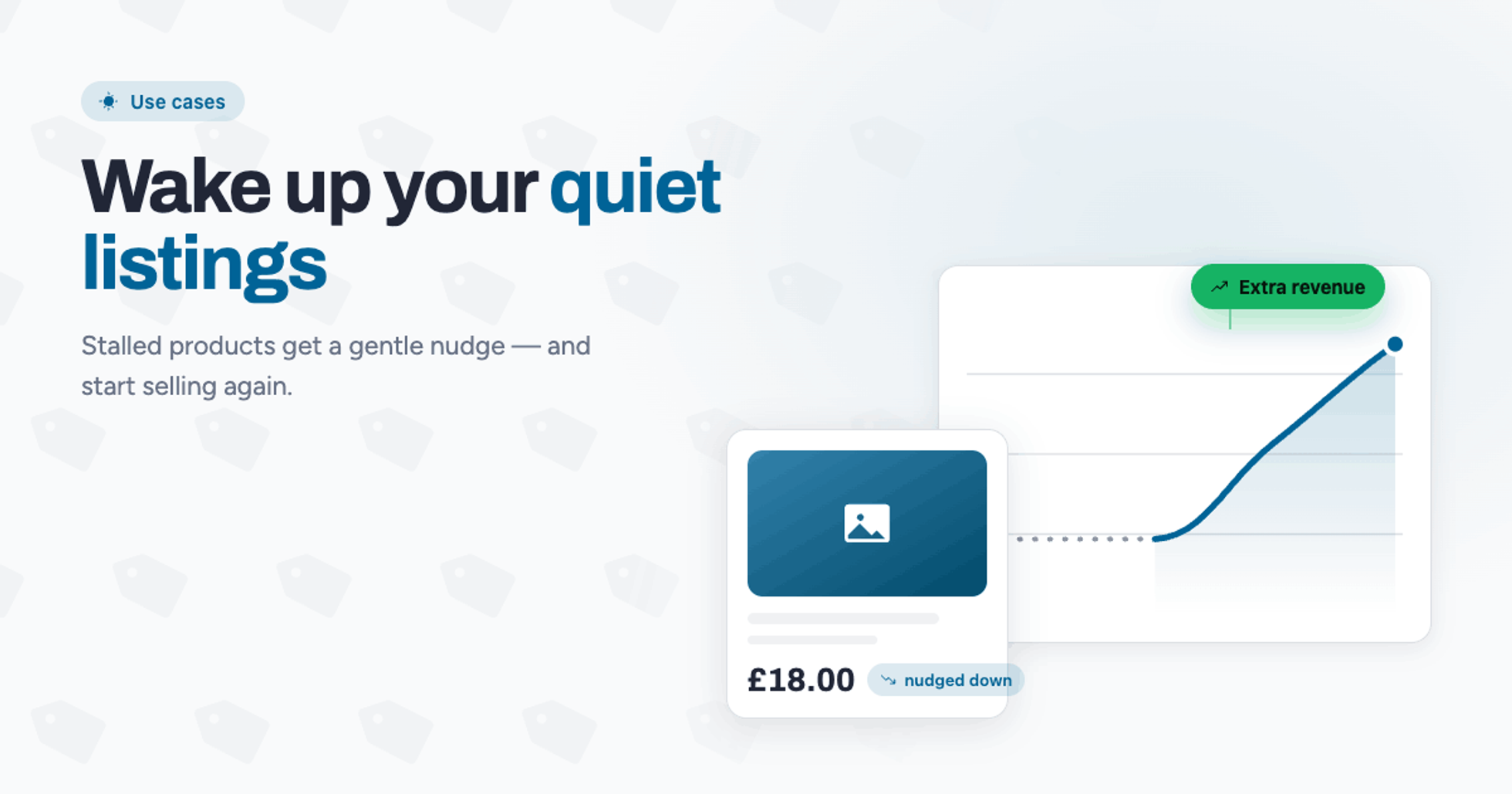
Somewhere in your shop there's a long tail of listings that used to sell and now just sit there. They are not free to keep. On Etsy a listing costs 20 cents to publish, expires after four months, and renews for another 20 cents whether or not it has sold. A bundle that's gone quiet is a small, steady leak — you're paying to keep stock visible that nobody is buying. Dynamic pricing is built to close that leak: it gently lowers the price on listings that have stalled until buyers come back, stays inside limits you set, and then shows you the revenue it recovered.
The hidden cost of a listing that won't sell
A single dormant listing is easy to ignore. A hundred of them is a monthly bill for nothing. The honest fix has always been to discount — but hand-pricing a back catalogue is the kind of fiddly, repetitive job that never reaches the top of the list. So the listings stay at full price, keep not selling, and keep renewing. Dynamic pricing takes that job off your plate and runs it on a schedule.
Set a floor, then let pricing do the discounting
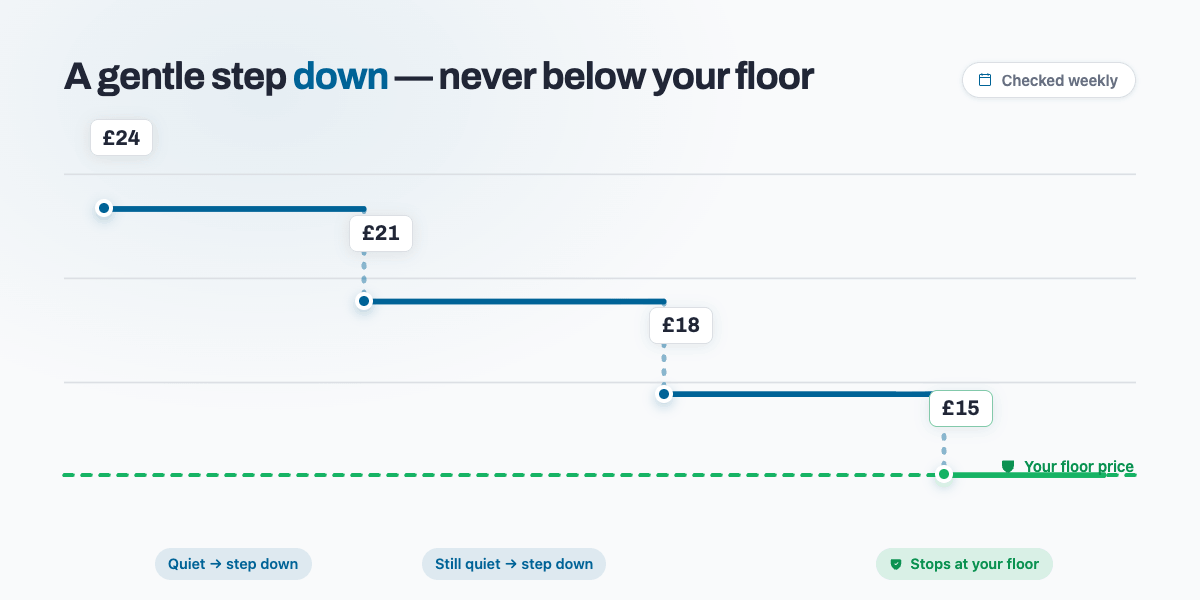
You start by setting a base price for each listing — the price you'd normally sell at. From there you choose how far pricing is allowed to roam: a floor that it can never drop below, and a ceiling it can never rise above. Out of the box the floor sits 30% below your base and the ceiling 20% above, so nothing ever runs away from you. You also pick how big each step is (5% by default) and how often pricing is allowed to move — weekly works for most shops.
Your floor is the safety net. Pricing will keep trimming a quiet listing step by step, but it stops the moment it reaches the lowest price you're willing to accept — and not a penny lower.
How a stalled listing gets nudged back to life
Pricing watches each listing for a quiet spell. If a listing hasn't sold within your no-sales window — 14 days to begin with — it's treated as stalled, and the next time the schedule runs its price comes down by one step. If it's still quiet next time, it comes down again, always landing on tidy prices that end in .99, and always staying above your floor. Reprices happen in a single pass across your whole shop per cycle, so it's not nibbling at your prices every night — it does its round, then goes quiet until the next window. Want it to act right now? There's a run-now button for that.
When sales return, the price climbs back up
The point isn't to race to the bottom — it's to find the price that sells. So once a listing starts moving again and clears a handful of recent sales (three by default), pricing eases the price back up a step at a time, never past your ceiling. The result is a listing that keeps drifting toward the sweet spot on its own: down when it's quiet, up when it's in demand, all inside the limits you set.
Proof, not guesswork: the extra revenue it generated
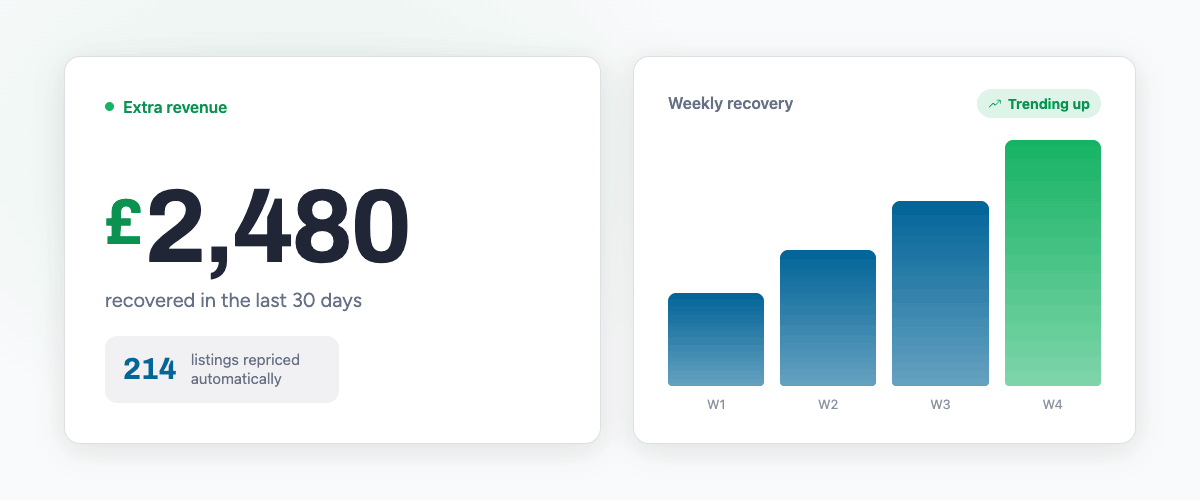
This is the part that makes it worth turning on. Every revived listing is tracked. When one of them sells below its base price, that whole sale counts as recovered revenue — because that listing simply wasn't selling before, so the sale is money you wouldn't otherwise have seen. When a busy listing sells above base, only the uplift over base is counted. Add it up and you get a straight answer to the only question that matters: how many listings were repriced, which ones came back strongest, and how much extra revenue the whole thing earned, week by week.
Set it up. Walk away.
Set your base prices, choose a floor and a ceiling, and let it run. It's free to sign up with no card, and dynamic pricing is part of the suite you can try free for 30 days — so point it at your quiet listings and see what comes back. Start with TRNSFR.
Try it on your shop.
Sign up free — no card. 3 features free forever, and a 30-day trial of everything else inside the app.